
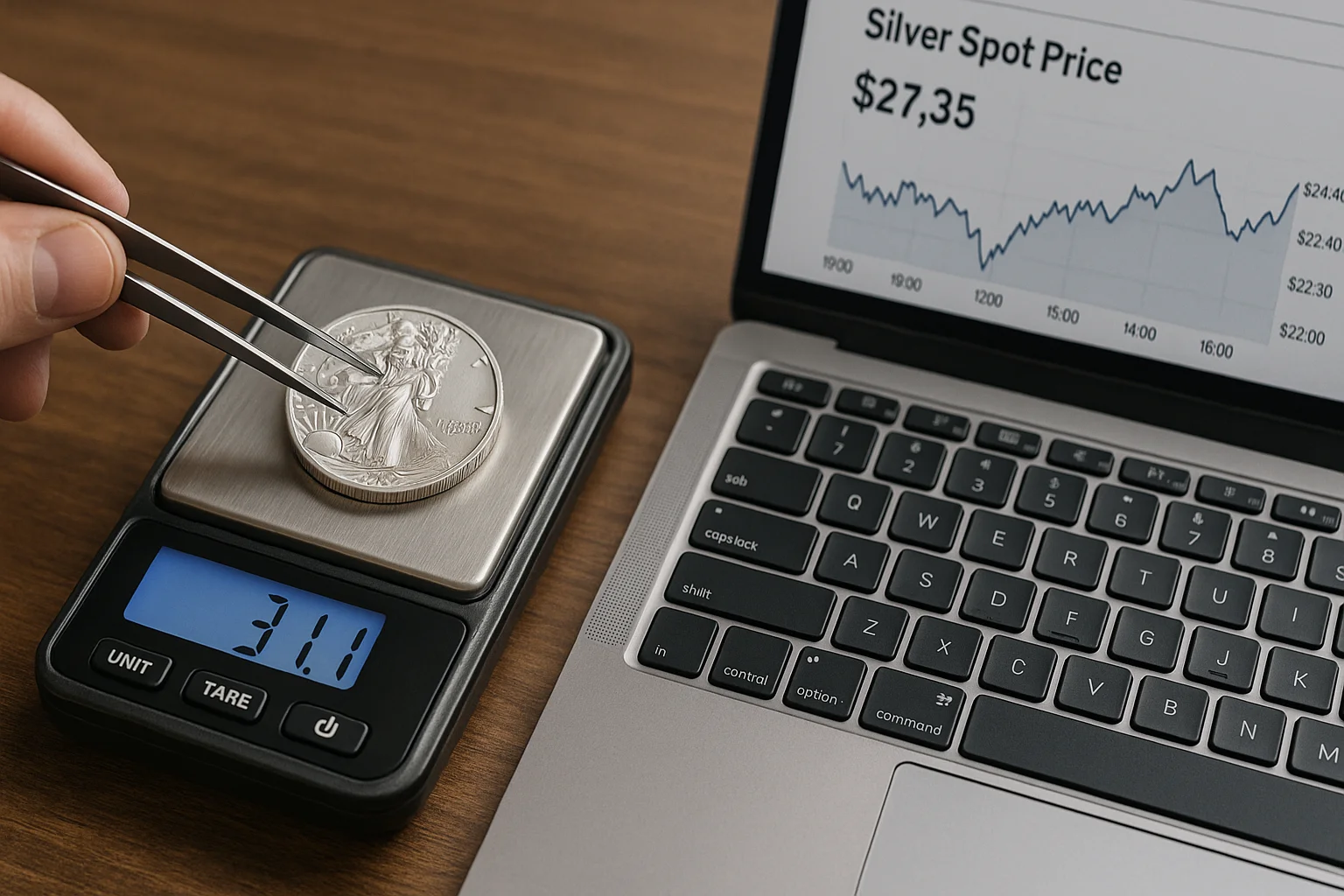
Many people first look at a coin and try to guess its worth by weight, shine, or age. Some check spot prices. Others use a coin value app to see a quick estimate. Both instincts make sense, yet neither gives the full answer. Two different price systems coexist in numismatics, and they often pull in opposite directions. One comes from the metal itself. The other comes from scarcity, collector demand, rarity tiers, and series-specific behaviour.
Now we offer you to consider how these two values form, how to separate them, and how to understand which one controls the real market price. The goal is simple: help any collector recognise when metal drives the number and when the premium comes from something far beyond bullion.
Two Types of Value: Metal vs. Collector Price
Firstly, you should know that every coin carries two forms of worth. Melt value reflects metal content. Numismatic value reflects collector demand. These two numbers rarely move in the same direction.
A coin may be made of precious metal yet have almost no collector premium. Another coin may consist of an inexpensive alloy but sell for a high price because the series is scarce and the surviving supply is limited. Some pieces balance between these two categories. Understanding both values helps avoid overpricing common silver coins and underestimating base-metal rarities.
Coins with strong collector demand break away from metal behaviour quickly. Coins with little collector interest return to the metal price, even if they are old or made of silver.
What Melt Value Actually Represents
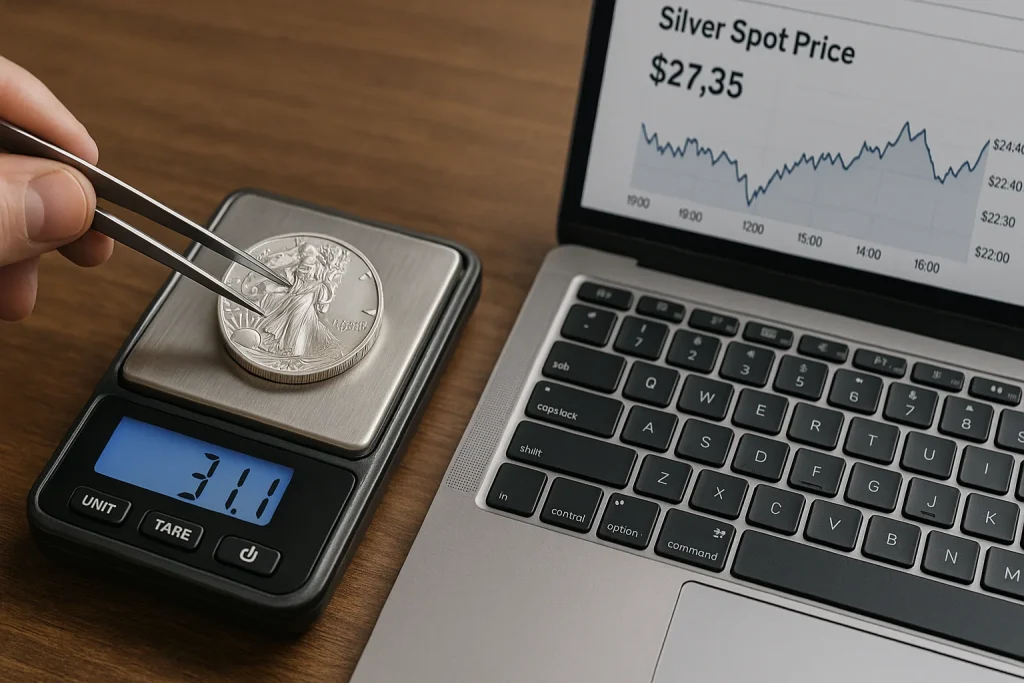
Melt value is the simplest part of pricing. It reflects nothing but the metal structure inside the coin. Silver, gold, and copper have market rates. These rates move with global demand, industrial use, and trading patterns. The price changes daily, sometimes hourly, and affects every coin that carries enough metal to matter.
Melt value helps determine a baseline. It prevents selling bullion coins for less than their material worth. It helps when dealing with worn pieces whose details have faded. It also helps in authenticity checks, because weight and composition must match official data.
A table below summarises how melt value forms:
| Component | Meaning | Impact |
| Metal type | Silver, gold, copper, nickel | Defines the base worth |
| Weight | Actual metal mass | Higher mass increases the melt value |
| Purity | Concentration of the metal | Determines metal content accuracy |
| Spot price | Current global metal rate | Changes melt value daily |
Melt value has nothing to do with design, year, rarity, or survival. It is a calculation, not a collector’s judgment.
What Numismatic Value Represents
Numismatic value forms from a completely different logic. It depends on scarcity, grade, survival patterns, age, series history, demand cycles, and the strength of the collector base. It builds independently of the metal. Two coins made of the same alloy can behave very differently based on which year they belong to and how many pieces survive in good shape.
This value is strongest in:
- Key dates;
- Important mint marks;
- Low-survival issues;
- Rare varieties and die errors;
- Older coins preserved in high grade.
A bronze rarity may sell for a high price even though its metal is almost worthless. A silver type may sit close to melt because millions survive in worn condition. Collectors’ attention, not metal, forms the market curve.
Numismatic value often moves slowly. It depends on the series’ reputation, historical interest, and long-term collector behaviour. It is less affected by short-term trends and more tied to population numbers and grade scarcity.
When Melt Value Dominates
Melt value becomes the main driver when the coin has no collector premium, weak demand, or heavy wear. These include:
- Bullion rounds sold for investment;
- Worn silver coins where the design is barely visible;
- Mass-produced common-date world coins;
- Pieces are heavily damaged, scratched, or cleaned.
In these cases, buyers do not chase rarity. They check metal charts. Condition does not matter unless it severely decreases weight or indicates counterfeit risk.
A heavily worn 1910s silver coin may have interesting age but little collector interest. Its price behaves like bullion. A scratched 1-oz bullion coin drops to near melt because damage removes the collector factor. Even older silver coins with high mintage often follow melt unless the date is scarce.
When Numismatic Value Dominates
Numismatic value dominates when the market cares more about scarcity than about metal. Coins with rare dates, limited mint marks, or sensitive survival patterns often show prices far beyond melt. This applies to both base-metal and silver series.
Examples include:
- Date-and-mint combinations with historically low survival;
- Limited-run commemoratives sought by collectors;
- Early issues with design variations;
- Series with strong demand and established price tiers;
- Errors and varieties where collectors pay for rarity, not metal.
You can refer to the specific examples:
Numismatic value dominates when collectors pay for scarcity rather than metal weight. A good example is the 1909-S VDB Lincoln Cent. It is made of bronze, so its melting value is almost nothing.
The price comes from limited production, the early position in the Lincoln series, and the low number of well-preserved pieces. The market responds to rarity, not the metal itself, so the coin sells far above melt in almost every grade.
Another clear case is the 1916-D Mercury Dime. The coin contains a small amount of silver, and its melt value is only a few dollars. Yet even worn examples sell for much higher prices.
The Denver issue had a small mintage, most pieces circulated heavily, and high-grade survivors are scarce. Demand focuses on the date-and-mint combination, so the numismatic premium outweighs the metal value by a large margin.
Thus, here, as a rule, a base-metal coin from a low-survival year can outperform a common silver coin by a large margin. A century-old bronze coin in EF may surpass silver melt by 20–30 times because the numismatic factor has a stronger influence.

How Apps Interpret Value
A coin identification app recognises shape, inscriptions, edge type, and general layout. It identifies the type, provides official parameters and adds reference prices derived from catalogues and typical sales for that type.
These tools offer:
- A quick outline of the coin’s identity;
- Confirmation of the metal composition;
- Clarity on mint years and versions;
- A starting value corridor.
However, you should remember that almost no one app does not:
- Judge condition with precision;
- Detect subtle wear;
- Read tone quality;
- Analyse grade scarcity;
- Interpret survival patterns;
- Separate melt from numismatic premium.
This is why app values help with orientation but not with final pricing. They give structure, especially with unfamiliar world coins, but manual evaluation still decides the real price.
But at this time, Coin ID Scanner assists by eliminating confusion at the earliest stage. It confirms the correct type, shows official specs, and stores scans for accurate comparison. This reduces misidentification in world lots, regional issues, and worn mid-century pieces.
The app sets the factual baseline but does not replace manual judgment. After the type and metal are confirmed, the collector still checks the condition, rarity tiers, and approximate market price.
How to Separate Melt Value from Numismatic Value
Collectors often face the same question: is this coin valuable because of the metal or because of collector demand? The steps below give a consistent way to answer.
Step 1: Confirm Metal and Weight
This determines whether melt value matters. Silver or gold coins always carry a baseline. Base-metal coins rarely do.
Step 2: Evaluate Surface Condition
Heavy wear and deep scratches shift many silver coins down to melt. Clean fields and preserved relief often create premiums, even in low-metal coins.
Step 3: Check Year, Mint Mark, and Variety
These traits define collector demand. A high-mintage year with heavy survival rarely moves beyond melt. A scarce year with low survival behaves differently.
Step 4: Compare with Completed Sales
Actual sale history shows whether collectors pay a premium. If finished sales sit above melt, numismatic value is active.
Step 5: Check Survival Patterns
Some dates appear in huge numbers but rarely in high grade. This imbalance builds strong premiums.
Step 6: Confirm Authenticity
Fake silver coins do not follow melt or numismatic logic. Verification ensures both components are real.
Step 7: Combine All Results
A coin may show melt value, numismatic value, or a mix. The sequence reveals which one dominates.
Common Mistakes When Mixing Melt and Numismatic Value
Errors happen when collectors assume that metal always determines price or that age guarantees a premium. Silver and gold attract attention, but many such coins remain common. Bronze and nickel do not attract attention until collectors study survival and rarity.
Typical mistakes include:
- Trusting metal more than grade;
- Assuming every old silver coin is valuable;
- Ignoring varieties;
- Using asking prices instead of completed sales;
- Overlooking how survival affects the premium;
- Misreading worn coins that look common but belong to scarce dates.
Avoiding these mistakes helps keep evaluations accurate and consistent.
Conclusion: Clear Rules for Reading Value
Melt value measures metal. Numismatic value measures demand. Both must be checked because they operate independently.
Apps help identify the coin, confirm metal, and outline a price corridor. Manual review shows whether the coin deserves more than its metal value. Soft light, careful inspection, and completed sales reveal the true market position. A coin may follow melt or behave like a collectible, and recognising the difference keeps pricing realistic and prevents costly mistakes.
The coin value checker app may support the first stage, but grade, rarity, and survival define the final number. This method creates stable and consistent results across all metals and series.